


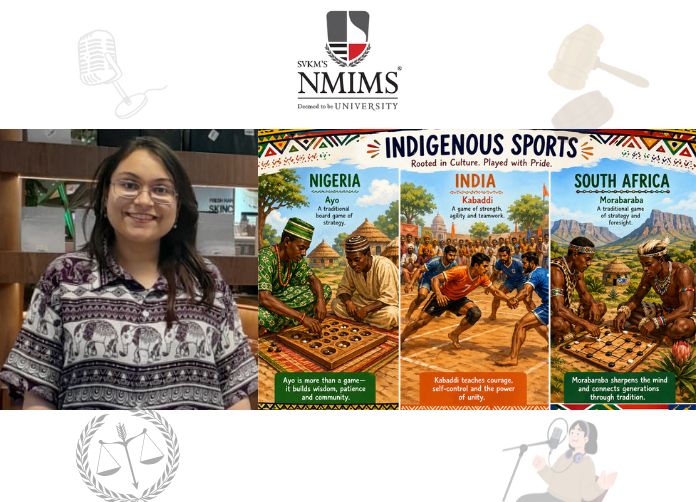
On the occasion of World Intellectual Property Day 2026, observed globally with a focus on IP and the sports industry, SVKM’s NMIMS marked its academic presence through a meaningful contribution to international discourse on intellectual property and cultural heritage.
Ms. Shraddha Pandit, Assistant Professor of Law at SVKM’s Kirit P. Mehta School of Law, NMIMS Mumbai, was featured as a distinguished speaker on the Everything IP Law Podcast special episode titled “IP and the Future of Indigenous Sports: From Ancestral Games to Global Arenas.”
The episode brought attention to a critical yet often underexplored area—the intersection of intellectual property rights and indigenous sporting traditions. It highlighted how traditional sports across regions—from India’s Kabaddi to Nigeria’s Ayo and South Africa’s Morabaraba—carry deep cultural, social, and historical significance, while navigating challenges within modern IP frameworks.
During the discussion, Ms. Pandit offered valuable insights into the evolution and commercialization of indigenous sports in India, particularly examining Kabaddi’s transformation into a global sporting phenomenon. She also addressed the limitations of existing intellectual property mechanisms, such as Geographical Indications, in safeguarding community-owned cultural practices.
The session further explored key questions around ownership, preservation, and ethical commercialization of indigenous knowledge systems, emphasizing the need for more inclusive and context-sensitive legal frameworks that respect collective heritage.
In recognition of her contribution, Ms. Pandit received a formal letter of appreciation from the Everything IP Law Podcast, acknowledging her nuanced analysis and significant role in enriching the global conversation on intellectual property and indigenous cultural expressions.
This engagement reflects NMIMS’ continued commitment to fostering academic thought leadership, encouraging research-based dialogue, and contributing to global conversations on emerging legal and societal challenges.

